

PRP
Unter plättchenreichem Plasma (abgekürzt PRP) versteht man von Menschenhand hergestelltes Blutplasma, in welchem die Blutplättchen in deutlich höherer Konzentration vorliegen als im Blut, spricht 2x, 3x oder noch stärker konzentriert. Blutplasma (Plasma) nennt man die Blutflüssigkeit, also die flüssigen Bestandteile des Blutes ohne Blutzellen.




Im Blut gibt es drei Arten von Zellen
- Die roten Blutzellen (oder auch Blutkörperchen) (Erythrozyten): diese sind für den Sauerstofftransport verantwortlich.
- Die weißen Blutkörperchen (Leukozyten): diese sind für die Körperabwehr und Immunabwehr verantwortlich.
- Die Blutplättchen (Thrombozyten): diese sind für die Blutgerinnung verantwortlich und in weiterer Folge auch für die Wiederherstellung (Heilung) des verletzten Gewebes.
Wir schenken hier unsere Aufmerksamkeit in Blutplättchen. Sie sind viel kleiner als die roten und die weißen Blutkörperchen. Ihre übliche Konzentration liegt bei 150-300.000 pro Mikroliter Blut. Ihre Aufgabe kann kurz gefasst wie folgt beschrieben werden: wenn es zu einer Verletzung kommt, dann formen die Blutplättchen einen Knäuel, der gemeinsam mit den im Blut vorhandenen Gerinnungsfaktoren das verletzte Gefäß abdichten kann. Wenn nun einmal die Blutung gestoppt ist, dann platzen die Hüllen der Blutplättchen und ihr Inhalt wird freigesetzt: dabei handelt es sich dabei um hunderte verschiedene Wachstumsfaktoren. Diese sehr wertvollen und sehr nützlichen Eiweißkörper haben die Fähigkeit, zerstörtes Gewebe wiederherzustellen und den Heilungsprozess in Gang zu setzen.
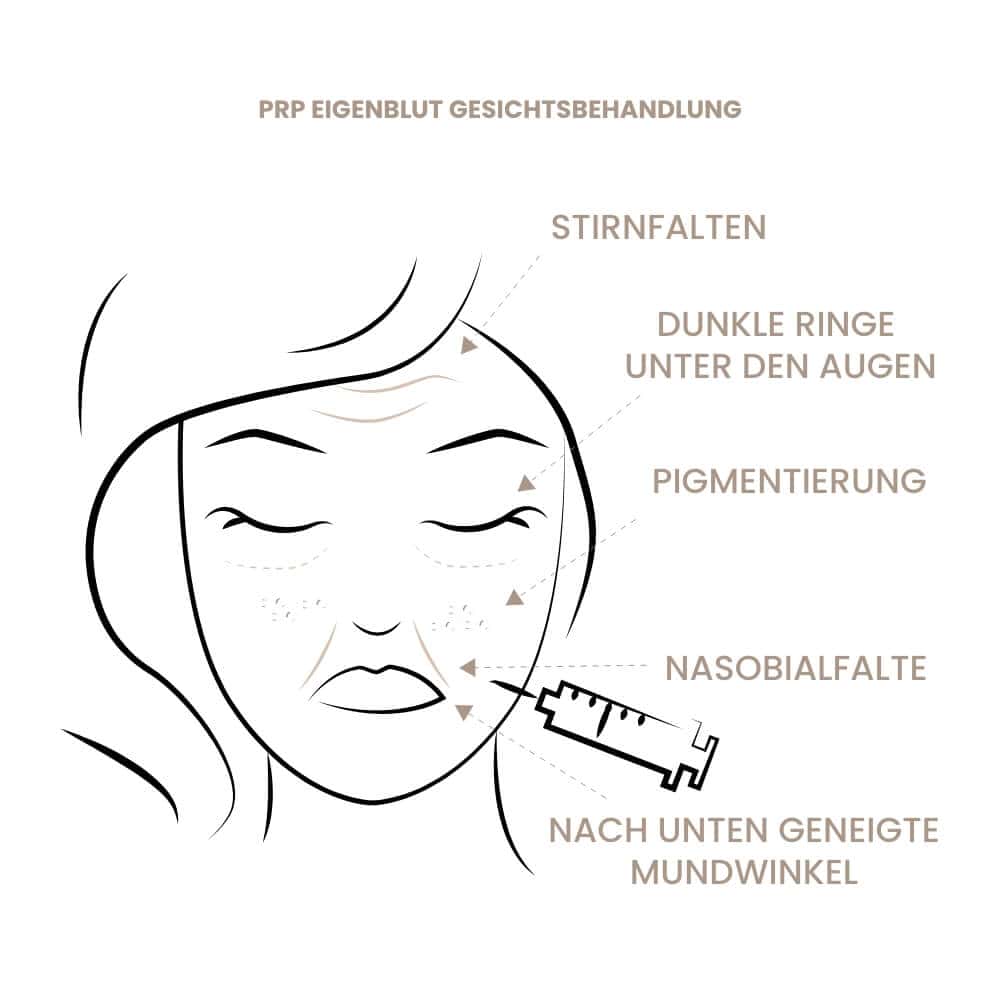
Warum und wozu wird PRP hegestellt?
1970 wurde erstmals beschrieben, dass man relativ einfach Blutplättchen konzentrieren und dieses Konzentrat zu Heilungszwecken medizinisch einsetzen kann. Wie bei einer üblichen Blutabnahme werden je nach Bedarf 10-40 ml Blut abgenommen, in eine Eprouvette abgefüllt die eine gerinnungshemmende Substanz (Cacl) enthält und zentrifugiert. Nachdem die verschiedenen Bestandteile des Blutes (Zellen, Plasma) ein unterschiedliches spezifisches Gewicht haben, entstehen im Röhrchen verschiedene Phasen. Zu unterst liegen die roten Blutkörperchen, sie bilden ja auch den Löwenanteil der Zellmasse. Dann kommt eine dünne Schicht mit den weißen Blutkörperchen (engl.: buffy coat), die ist mit freien Auge kaum erkennbar, und darüber sieht man die gelbliche flüssige Phase mit dem Blutplasma. Zu unterst in dieser Phase liegen die konzentrierten Blutplättchen, die jedoch mit dem freien Auge nicht erkennbar sind. Wenn man nun von dieser untersten Phase Plasma entnimmt, erhält man das plättchenreiche Plasma (PRP), also eine Flüssigkeit, in welcher die Konzentration der Blutplättchen im Vergleich zum Blut deutlich erhöht ist. Im oberen Bereich der zentrifugierten Eprouvette schwimmen dann viel weniger Blutplättchen, daher nennt man diese Phase auf PPP, Abkürzung für platelet poor plasma, wobei diese Terminologie im deutschem Sprachgebrauch nicht eingesetzt wird.
Foto und Zeichnungen
Als Richtlinie gilt: ein Fünftel des Volumens vom abgenommenen Blut kann als PRP verwendet werden. Benötigt man also 10 ml PRP, dann müssen 50 ml Blut abgenommen werden. Hier ist auch gleich die Grenze der PRP Therapie vorgegeben: man kann einem Menschen mit durchschnittlicher Körpergröße und Gewicht in etwa 150 ml Blut abnehmen ohne dass dies zu einer Kreislaufschwäche oder Unwohlsein führt. Somit ist die Gewinnung von 30 bis maximal 40 ml PRP pro Behandlung möglich.
Für die meisten Behandlungen reichen viel geringere Mengen (im Schnitt 20-40 ml) , sodass die allermeisten bekannten Behandlungen problemlos möglich sind.
Herstellung von PRP / Industrie / Qualitätskontrolle
Wie eingangs erwähnt, erfolgte die Herstellung von PRP mittels Blutabnahme und Zentrifugation des Blutes. Um den behandelnden ÄrztInnen den Herstellungsprozess zu erleichtern, hat die Industrie Kits hergestellt (käufliche Sets welche die nötigen Bestandteile zur PRP Herstellung enthalten, ausgenommen die Zentrifuge), Es gibt in etwa 50 solcher Kits auf den Markt. Dazu muss natürlich auch eine Zentrifuge erworben werden, diese wird mit einer fixen Einstellung geliefert, d. h. dass die Geschwindigkeit und die Dauer der Zentrifugation vorbestimmt ist und auch nicht geändert werden kann/soll. In den Kits befinden sich Nadeln, Spritzen und Filtersysteme, die das abgenommene Blut nach der Zentrifugation durch Umschichten der Bestandteile so verarbeiten, dass die/der Ärztin/Arzt das einsatzbereite PRP in der Spritze erhält. Dieser Prozess ist normiert.
Es hat sich aber herausgestellt, dass aufgrund der individuellen zellulären und physikalischen Eigenschaften des Blutes nicht immer PRP entsteht. Mit anderen Worten: wenn man immer das gleiche tut, bzw. wenn man das Blut immer auf dieselbe Weise zentrifugiert, dann erhält man eben nicht immer PRP, manchmal ist die Konzentration der Thrombozyten im Plasma nur etwa gleich oder sogar geringer als im normalen Blut. In den jüngsten Publikationen zeigte sich, dass man PRP nur in etwa 65-70 % der Fälle erzielt, in 10-15 % der Fälle ist die Konzentration in etwa mit dem Blut gleichzusetzen und in weiteren 10-15 % ist die Konzentration deutlich geringer als im Blut. Damit soll klar gemacht werden, dass man das Ergebnis der PRP-Herstellung unbedingt kontrollieren muss, bevor man es den Patienten verabreicht, weil offenbar nur bei etwa zwei Drittel der routinemäßigen Herstellung PRP entsteht. So eine Kontrolle ist gar nicht aufwendig: es gibt kleine Laborgeräte mit welchen man innerhalb von 2 Minuten die Konzentration der Blutplättchen in der Plasmaprobe messen kann. Ist nun die Konzentration befriedigend, fährt man mit der Behandlung fort, sind zu wenige Blutplättchen im Plasma gemessen worden, kann durch neuerliches Zentrifugieren die Konzentration erhöht werden. Für den Patienten/Konsumenten ist es wichtig das zu verstehen und zu wissen: eigentlich sollte man nur dann einer PRP Behandlung zustimmen, wenn die PRP Konzentration von der behandelnden Person kontrolliert wird.
Einsazmöglichkeiten von PRP
Untenstehend eine Übersicht über die zahlreichen Einsatzmöglichkeiten von PRP.
Zusammenfassung
Die Einsatzmöglichkeiten von PRP sind tatsächlich mannigfaltig. Sie decken sich zu einem Großteil mit dem Behandlungsmöglichkeiten von Nanofett, wobei Nanofett deutlich effektiver ist jedoch auch mit einem weit größeren Aufwand verbunden ist.







Rezensionen
Das sagen unsere Patient:innen

Dr. Turkof made my lips more beautiful and symmetrical.
He looked from every angle and only injected the filler where I really needed it. I look natural — if it were possible, I would get more injected.
I know Dr. Turkof through a friend who came all the way from Germany specifically for him. She was very happy with him and recommended him to me, as I was really struggling with dark under-eye circles. My surgery was 3 months ago and I am very pleased with the natural result.
I had two operations with autologous fat transfer to the breast and ribs with Prof. Turkof.
The result is fantastic and I am very satisfied. The quality of Prof. Turkof as a plastic surgeon is, from my perspective, undisputed.

Kontakt
Interesse an einer Beratung?
Beliebte Behandlungen
Breast augmentation using the patient’s own fat
Gentle breast augmentation using the body's own fat – for a natural shape and harmonious proportions.
Learn moreEyelid Lift in Vienna | Youthful Eyes
A fresher, more alert appearance achieved by removing excess skin from the upper and lower eyelids.
Learn moreFacelift
Facial and neck tightening for a visibly younger, naturally fresh appearance.
Learn moreGynecomastia
Treatment for male breast enlargement to achieve a masculine, flat chest contour and boost self-confidence.
Learn moreRhinoplasty
Aesthetic and functional rhinoplasty for a harmonious facial profile.
Learn more