

Your specialist for facelifts in Vienna
A facelift is the most effective method for visible yet natural rejuvenation. Sagging structures are precisely repositioned, wrinkles are smoothed, and lost volume is restored—for a fresh, vibrant overall appearance, without looking like you’ve had surgery.
The result: look younger, stay true to yourself.




Facelift – our specialty
The facelift is one of the oldest procedures in cosmetic surgery and is considered the “Rolls-Royce” of rejuvenation operations. The goal is a younger, fresher overall appearance without looking unnatural.
A properly planned facelift counteracts the aging process by repositioning sagging structures, smoothing wrinkles, and harmonizing volume in a targeted manner.

The most important information at a glance
The most important information to help you quickly assess whether a facelift is right for you.

Effective date
The results are immediately visible; the final result is assessed after the swelling subsides – usually after 6–12 weeks.

Durability
Long-lasting. Typically 8–12 years, depending on skin quality, lifestyle and initial condition.

Duration
Usually 2.5–5 hours, depending on the technique (e.g. SMAS/Deep-Plane), combination procedures and neck area.

Costs
Depending on the region and complexity. See cost estimates below.

Check
Several check-up appointments are included. Final check-up usually takes place after 1 year.

First Ordination
The initial consultation is included with the purchase of the book "Facelift", otherwise €200-300 (see process for details).







Natural appearance – without an “operated” look
Why a facelift?
Modern techniques allow for targeted correction of problem areas and – in experienced hands – very natural-looking results. The dreaded loss of facial expression or “distorted corners of the mouth” is no longer an issue when performed professionally.
Depending on your individual needs, we combine the most modern methods, including:
- SMAS / Deep-Plane (maximum effectiveness)
- MACS / Midface (targeted midface lift)
– Corset neck (precise neck contour)
– Hemostasis mesh (since 2019): minimizes the risk of post-operative bleeding, usually no drains required, sometimes patients can go home on the day of surgery.

Your advantages at a glance
- Natural result: visibly rejuvenated, without an “operated” look.
- Repositioning instead of overtightening: sagging structures are lifted anatomically correctly.
- Sustainable effect: long-lasting rejuvenation instead of short-term tightening.
- Individual technique selection: SMAS, deep plane, MACS, corset neck – everything is tailored to you depending on your initial findings.
- Preservation of facial expressions: Preservation of facial expressions through tension-free, modern surgical methods.
- Combination with other areas: Holistic correction of forehead, mid-face, cheeks and neck can be combined.
- Reduced risk of post-operative bleeding: Reduced risk of post-operative bleeding thanks to modern hemostasis technology
- Decades of expertise: Personal experience since 1997 with a high degree of specialization in the field of facelifts.
Facial aging – what happens?
Aging process in the face
Wrinkles, age spots, and sagging skin appear differently from person to person. Factors such as sun exposure, stress, alcohol/nicotine, air pollution, medications, free radicals, and heat/cold can accelerate skin aging.
For minor corrections, autologous fat transfer or PRP (platelet-rich plasma) can be a useful addition.
Loss of volume in the face
Tissue structures weaken with age. Gravity causes them to sag, wrinkles form – and in addition, subcutaneous fat decreases, causing the face to lose volume.
Less important than individual wrinkles is the repositioning of sunken structures and the restoration of lost volume.
Aesthetic facial surgery considers three aspects:
– Repositioning of sagging structures
– Smoothing of skin wrinkles
– Volume restoration in flattened areas
The four regions during a facelift
Forehead – Midface – Cheeks – Neck
Each region can age at a different rate. Therefore, a precise analysis of the problem is crucial for planning the procedure effectively and achieving a natural-looking result.
How does the procedure work?
-
1
Analysis and planning
Precise analysis of problem areas in all 4 regions. Selection of the technique (e.g., SMAS/Deep-Plane, MACS/Midface, Corset Neck) depending on anatomy and desired outcome.
-
2
Repositioning & Tightening
Sagging structures are returned to their natural position, and excess skin is adjusted without tension. Volume is augmented if necessary (e.g., with autologous fat).
-
3
Rest & Aftercare
Follow-up appointments ensure the healing process and outcome. Modern hemostasis techniques reduce the risk of complications and often make drains unnecessary.
Regions in detail
The forehead and eyebrow area significantly influence our facial expression. Drooping brows or pronounced forehead wrinkles can make one appear tired or stern.
A forehead lift raises the brows, smooths wrinkles, and gives the face a more open, alert expression. Depending on the forehead height and anatomy, coronal, pretrichous, or endoscopic techniques are used – always with the goal of a natural, harmonious result.
Forehead lift in detail
A forehead lift is used to eliminate forehead wrinkles and lift the eyebrows; it is an effective method for eliminating a “sad” facial expression. The position of the eyebrows significantly influences facial expression.
A successful forehead lift can be just as effective as a successful cheek lift. The height of the forehead is crucial when choosing the forehead lift method.
Three methods are available:
● coronal forehead lift
● pretrichous forehead lift
● endoscopic forehead lift
If you are interested in a forehead lift and have a low forehead, the coronal forehead lift would be suitable. In this method, the incision runs in an arc shape within the hairline. In addition to eliminating forehead wrinkles and lifting the eyebrows, this procedure also raises the forehead.
If you have a high forehead, the pretrichous forehead lift would be suitable. In this method, the incision runs along the hairline.
In addition to eliminating forehead wrinkles and lifting the eyebrows, this procedure results in a lower forehead.
With an endoscopic forehead lift, no excess skin is removed, so almost no scarring occurs; however, it is significantly less effective than a coronal or pretrichal forehead lift.
The midface is often the first area to show signs of aging: volume loss and sagging structures lead to dark circles under the eyes, flattened cheeks, and pronounced nasolabial folds.
A midface lift specifically lifts these areas and restores volume and contour. Depending on the individual case, different techniques are used – always with the goal of a natural, harmonious result.
Mid-face lift in detail
A mid-face lift corrects the area extending from the lower edge of the bony eye socket to the outer corner of the mouth. This area often ages earlier than other parts of the face. Volume loss and tissue laxity cause the midface to sag, leading to dark circles under the eyes, flattening of the cheekbones, and accentuation of the nasolabial folds.
Therefore, a mid-face lift has three goals:
● Correction of dark circles under the eyes
● Plumping of the flattened inner cheekbones
● Correction of the nasolabial folds
Three methods are available:
● Subperiosteal mid-face lift
● Mid-face lift using the MACS technique (Minimal Cranial Suspension)
● Mid-face lift with an extended SMAS flap
Please don’t be intimidated by the technical terminology. The choice of technique depends on the anatomical conditions, specifically which of the three problem areas (dark circles under the eyes, cheekbones, nasolabial folds) is most prominent.
If the dark circles are pronounced, the upper tissue layer must be lifted, which is best achieved with the MACS technique. At the same time, the nasolabial folds are effectively corrected because the SMAS, the tissue layer directly beneath the skin, is lifted.
If the flattened cheekbones are the primary concern, volume must be added to this area, for which the subperiosteal technique is suitable. This method is not as well-suited for correcting the nasolabial folds.
The third technique is not a standalone procedure but can only be used as a complement to a cheek lift. If, in addition to a sagging midface, there are also jowls and wrinkles in the cheek area, the midface can also be corrected as part of the cheek lift by extending the technique used (SMAS flap), but it is not as effective as the MACS technique.
A cheek lift is the primary procedure for tightening the lower third of the face. Sagging cheeks or “jowls” can make the face appear heavy – a precise lift restores contour and firmness.
Modern SMAS or deep-plane techniques also lift the deeper structures, ensuring a natural, lasting result without loss of facial expression. If desired, the procedure can be combined with a neck lift.
Cheek Lift in Detail
Cheek lifts are the most frequently performed cosmetic facial surgery and offer the widest range of techniques.
Cheek lifts can correct jowls and plump up a flattened cheekbone area, but they are less effective at correcting nasolabial folds and not at all at correcting dark circles and under-eye bags.
The classic method is the SMAS cheek lift. This is also the most effective technique for permanently correcting jowls and wrinkles. It is a two-layer procedure in which the SMAS is tightened, the cheek skin is gently stretched, and after removing the excess skin, it is repositioned without tension. This prevents the dreaded loss of facial expression.
IMPORTANT: Not all SMAS lifts are created equal!
The SMAS can simply be doubled, or it can be completely detached from the underlying tissue at the cheekbone/cheek area and dissected downwards/inwards towards the nasolabial fold. Only in this way can the optimal effectiveness of this technique be achieved, but it also requires significantly more time, and it is essential to protect the delicate branches of the facial nerve (n. facialis). The ‘deep-plane’ facelift is currently the most demanding technique; it requires patience and extensive experience. It is the most effective, but the face remains swollen for a longer period.
Besides this method, there is a whole range of techniques that require less effort but are also far less effective. These include so-called “modern” methods, which are frequently advertised in newspapers and magazines and claim the supposed advantages of rapid healing and short recovery times.
These types of procedures are only suitable for relatively young patients where minimal intervention is actually necessary. Offering a mini-facelift to a 60-year-old patient with typical age-related problem areas is unacceptable and irresponsible.
A cheek lift can be easily extended to include a limited neck lift.
A neck lift is often combined with a cheek lift, but it can also be performed on its own.
Modern techniques not only tighten the skin, but also the sagging neck muscles. The corset technique is particularly effective, restoring a clear neck and chin contour and a defined profile.
Neck Lift in Detail
Neck tightening is most often combined with a cheek lift, but it can also be performed on its own.
There are three methods to choose from:
● Neck tightening by skin removal alone
● Neck tightening using the SMAS technique
● Neck tightening using the Feldmann corset technique
Neck lifts performed solely by skin removal behind the ear are ineffective and outdated. The standard method is the lateral tightening of the platysma muscle using the SMAS technique. The platysma is the superficial, paired rectus muscle of the neck that merges laterally into the SMAS, and its weakening causes the formation of a double chin.
By far the most effective method is the Feldmann corset procedure because it creates a new, band-like anatomical structure by uniting the two halves of the platysma muscle. This allows the neck to be lifted inwards and upwards. In profile, the neck then forms a right angle again. Please take a look at the pictures; the results of the Feldmann technique are sometimes overwhelming.
This is how your treatment will proceed
-
01
First Ordination
The initial consultation is included with the book "Facelift" (€40). Without the book: €200 (approx. 30 min). Longer/more detailed consultations: €300. Second opinion after prior surgery elsewhere: €300 (credit towards revision surgery).
Personal tip: Always get a second opinion before undergoing any procedure.
-
02
Hospital stay (optional)
Usually performed on an outpatient basis or with one overnight stay. Depending on the duration of the surgery, the overnight stay, and the room category, the cost is €2,800–€9,500. Thanks to a hemostasis mesh, a hospital stay is often unnecessary.
-
03
Before the procedure
All information regarding examinations and planning can be found here:
-
04
Anesthesia and procedure
Usually sedation (twilight sleep), possibly general anesthesia in combination cases. Anesthesia: €1,200–2,500 (often around €1,400–1,600).
-
05
After the procedure
Rest, keep your head elevated, and avoid physical exertion. You can usually resume social activities after a few weeks, depending on the swelling.
-
06
Visits & Inspections
Inspections and visits are included in the fee. Final inspection after 1 year.
When is a facelift an option?
Conditions for the intervention
Good general health and realistic expectations. Crucial factors are skin quality, tissue structure, and the severity of problem areas on the forehead, mid-face, cheeks, and neck.
Pre-operative examinations as planned: laboratory tests (including coagulation), possibly ECG/X-ray, clearance by internist/general practitioner. Details in the surgical preparation.
Important Note
Smokers are strongly advised to significantly reduce or pause their smoking, as nicotine impairs blood circulation and can promote wound healing disorders.
Cost
How much does a facelift cost in Vienna?
The costs depend on the region, technology and effort involved, and range between €5,500 and €14,500.
Combined procedures are generally cheaper than the sum of the individual operations, since hospital and anesthesia costs do not double linearly.
Before/After comparison
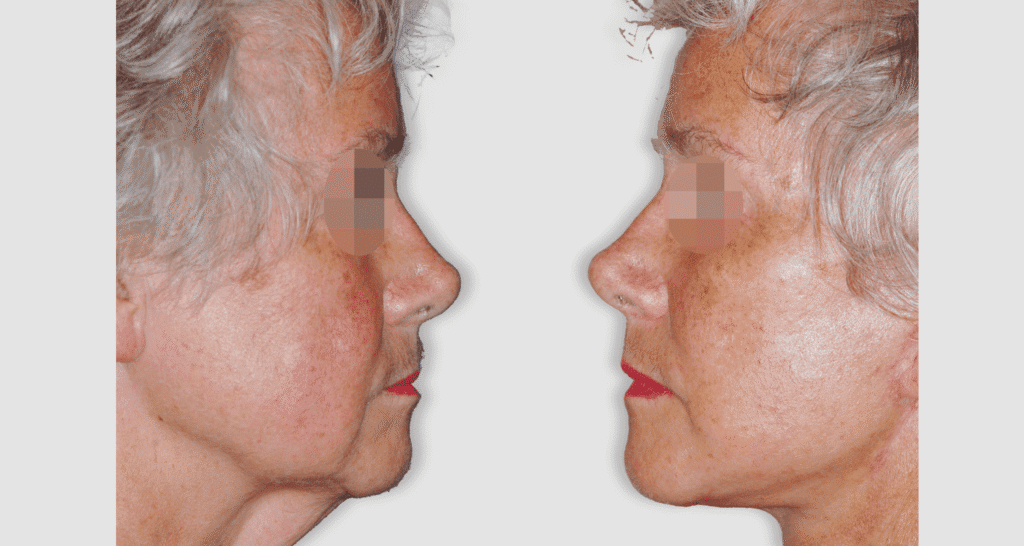
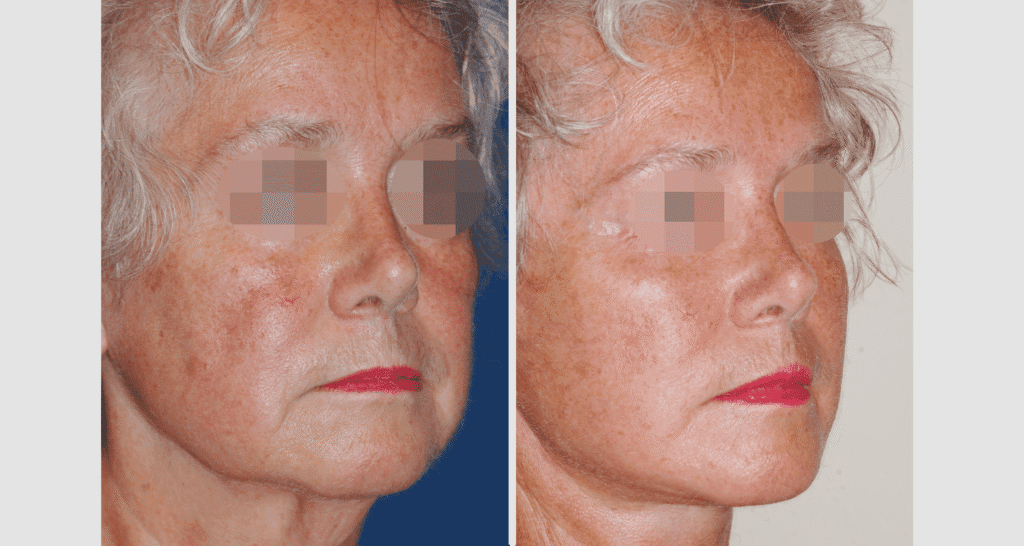
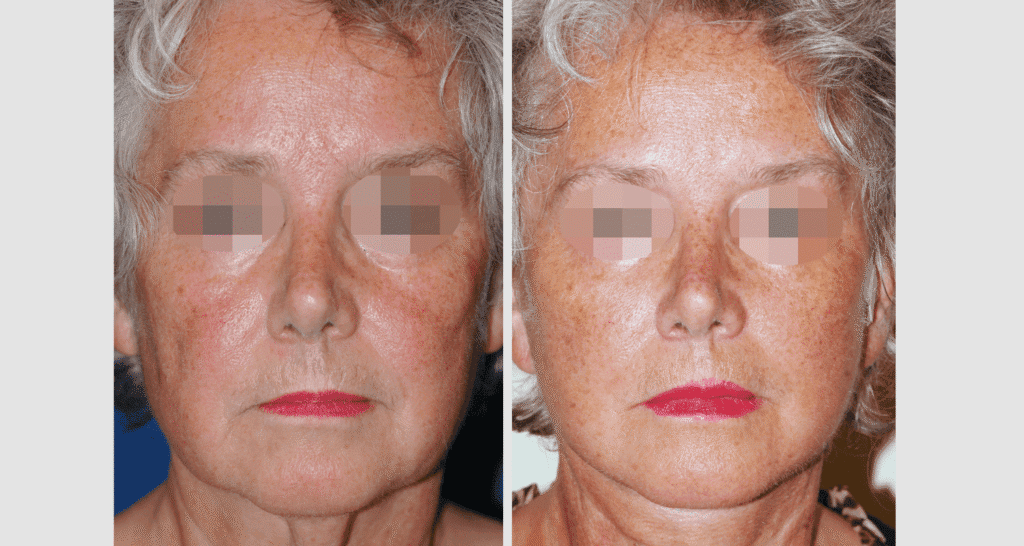
Reviews
What our patients say

Dr. Turkof made my lips more beautiful and symmetrical.
He looked from every angle and only injected the filler where I really needed it. I look natural — if it were possible, I would get more injected.
I had two operations with autologous fat transfer to the breast and ribs with Prof. Turkof.
The result is fantastic and I am very satisfied. The quality of Prof. Turkof as a plastic surgeon is, from my perspective, undisputed.
I know Dr. Turkof through a friend who came all the way from Germany specifically for him. She was very happy with him and recommended him to me, as I was really struggling with dark under-eye circles. My surgery was 3 months ago and I am very pleased with the natural result.
Frequently Asked Questions
At what age is it advisable to have a facelift?
There is no single answer to this question. People age individually, therefore there is no uniform age for surgery. Depending on the extent to which someone is bothered by age-related problem areas, a procedure may become relevant as early as 45 or as late as 60. The task of a reputable doctor is to inform those seeking advice about what is medically sensible and feasible.
How long does the effect of a facelift last?
If done correctly, you can gain approximately 10 years.
Does a facelift restrict facial expressions?
If performed correctly, there is no risk of loss of facial expression. The prerequisite is that the facial skin itself is not stretched, but rather the underlying fascia, the SMAS.
How often can you have a facelift?
A facelift can be repeated or supplemented after 10 years. More than three operations are not recommended.
What is a mini facelift?
This refers to highly limited lifting procedures with low effectiveness, whose only advantages are rapid recovery and a low complication rate. A mini-lift is only indicated at a relatively young age (35-45 years) when there is little excess skin and the tissue is still relatively firm.
What can be corrected on the face?
Apart from the eyes, which are aesthetically improved with eyelid correction, there is a correction option for every area of the face (forehead, mid-face, cheek, neck).
What is the midface?
The midface extends from the lower edge of the lower eyelid to the corner of the mouth and reaches laterally to the cheekbone.
Are crow's feet and wrinkles around the mouth corrected during a facelift?
Crow’s feet are most effectively improved with a lateral brow lift or a forehead lift. Wrinkles around the mouth cannot be surgically corrected; laser or peeling treatments are suitable for this.
What can be corrected with a forehead lift?
A forehead lift eliminates horizontal forehead wrinkles and lifts the eyebrows. Lifting the eyebrows eliminates a “gloomy” facial expression and also corrects any existing pseudo-drooping eyelids.
Where do the scars run after a forehead lift?
Depending on the method used, the scar either runs completely within the hairline (coronal forehead lift) or along the forehead-hairline (pretrichial forehead lift). After an endoscopic forehead lift, some small scars remain in the hairline.
What can be corrected with a mid-face lift?
A mid-face lift corrects nasolabial folds, eliminates bags under the eyes and dark circles, and “plumps up” a flattened cheekbone area.
Where do the scars run after a mid-face lift?
If a mid-face lift is performed as a standalone procedure, the scars run just below the eyelashes of the lower eyelids, similar to a lower eyelid lift. If the mid-face lift is used as a complementary procedure to a cheek lift, no additional scars result.
What can be corrected with a cheek lift?
A cheek lift corrects hamster cheeks, removes skin folds in the cheek area and also corrects nasolabial folds to a lesser extent.
Where do the scars run after a cheek lift?
In a classic cheek lift, the scars run downwards from the hairline in the temple region along the ear cartilage to the earlobe, then upwards again on the back of the ear to the hairline.
What can be corrected with a neck lift?
A neck lift corrects the double chin, eliminates the turkey neck, and creates a nice angle between the chin and neck in profile view.
Where do the scars run after a neck lift?
In a neck lift, the scars run along the back of the ears or also along the underside of the chin if the platysma muscle is tightened as a supplementary measure.
Can a double chin be corrected with liposuction?
If the skin is firm and the double chin consists primarily of fat, liposuction alone can certainly achieve good results.
What can be operated on together?
The neck and cheek areas are often operated on together. The midface represents a significant extension of the cheek lift procedure; while a combined operation is possible, it requires careful consideration. Combining a forehead lift with a cheek lift is a significant extension and should not be performed routinely. A facelift is also frequently combined with an eyelid lift.
What complications can occur?
The most common complication is nighttime bleeding. Wound healing problems occur less frequently. Injuries to a facial nerve should not occur in experienced hands. Swelling and numbness usually subside within a few weeks.
How long do you have to stay in the hospital?
Depending on the extent of the procedure, a hospital stay of one to two nights is to be expected.
Do you experience pain after the operation, and how long does it last?
Pain is very rare after a facelift. However, feelings of tightness may occur, which usually subside after a few weeks.
When is one able to return to social life after a facelift?
Depending on the extent of the procedure, 2-4 weeks of rest should be planned.
Do you have any questions?
Personal consultation
Do you have any further questions or would you like some general information? We offer personalized, comprehensive advice, drawing on our experience since 1997.
You can schedule your appointment online at any time.
Our most popular treatments
Breast augmentation using the patient’s own fat
Gentle breast augmentation using the body's own fat – for a natural shape and harmonious proportions.
Learn moreEyelid Lift in Vienna | Youthful Eyes
A fresher, more alert appearance achieved by removing excess skin from the upper and lower eyelids.
Learn moreFacelift
Facial and neck tightening for a visibly younger, naturally fresh appearance.
Learn moreGynecomastia
Treatment for male breast enlargement to achieve a masculine, flat chest contour and boost self-confidence.
Learn moreRhinoplasty
Aesthetic and functional rhinoplasty for a harmonious facial profile.
Learn more