

Your specialist for gynecomastia in Vienna
Enlarged male breasts (gynecomastia or lipomastia) can significantly affect self-confidence. Through targeted surgical intervention, the breasts can be permanently corrected and a natural, masculine contour restored.




Gynecomastia – what exactly is it? And how is it treated?
Gynecomastia refers to the enlargement of the male breast caused by mammary gland tissue. This should be distinguished from lipomastia, which involves an increase in fatty tissue alone.
In about 95% of cases, the condition involves a mixture of glandular and fatty tissue. Depending on the severity, the procedure can be performed on an outpatient basis or at a day surgery center.
Since 1997, surgical correction of gynecomastia has been one of my primary areas of expertise. With over 500 procedures performed, every treatment plan is based on experience, precise technique, and a clear goal: a permanently flat, naturally masculine chest contour with a harmonious overall result.

The most important information at a glance
The most important information to help you quickly assess whether gynecomastia is an option for you.

Effective date
The breast shape appears flatter immediately after the surgery. The final result becomes visible after the swelling subsides – usually after 6–12 weeks (longer in cases of pronounced changes).

Durability
The result is usually permanent. Removed glandular tissue does not regenerate; significant weight gain or hormonal fluctuations can affect the outcome.

Duration
Depending on the extent and method, the procedure usually takes 1–2.5 hours. In cases of significant excess skin or combinations thereof, the procedure may take longer.

Costs
Depending on the complexity and extent of the operation, the cost ranges from €2,500 to €8,000. On average, you can expect to pay around €5,500.

Check
Several follow-up appointments after the operation. Final check-up after one year.

First Ordination
The initial consultation is included with the purchase of the book ("Gynecomastia", €40). Without the book: €250 (detailed consultation: €300; second opinion: €300, creditable towards surgery).







Why correct gynecomastia?
The decision to undergo surgical correction of gynecomastia is usually not a spontaneous one. Often, men have been feeling for years that their chest doesn’t fit their male body shape. It becomes a focal point during sports, swimming, or when wearing tight clothing.
Some people feel their breasts are too large, others asymmetrical or soft. This often leads to increasing discomfort with one’s own body.
What many affected individuals have in common is the desire for a clear, masculine outline – without hiding, without evasion.
Surgical correction can help restore a harmonious appearance to the upper body. The goal is not a striking change, but a natural, flat chest shape – and thus often a significantly improved body image.

Your advantages at a glance
- Naturally masculine chest contour: The chest appears flat and harmonious in relation to the rest of the upper body.
- Permanent removal of glandular tissue: Removed breast glandular tissue usually does not grow back.
- A combination of precision and aesthetics: glandular tissue and excess fat are treated separately.
- Gentle, modern surgical technique: Fine incisions at the edge of the areola ensure scars that are as inconspicuous as possible.
- Individual surgical planning: Each breast shape is analyzed in detail – true gynecomastia, lipomastia or mixed form.
- Functional safety: Before every operation, a thorough hormonal and imaging assessment is carried out.
- Stable long-term effect: The result is usually maintained permanently if weight remains stable.
- Specialized experience: Many years of surgical experience in male breast correction. Results are usually permanent.
Forms and causes of gynecomastia
Hormonal fluctuations occur during puberty. If estrogen levels rise relative to testosterone, existing breast gland cells can grow.
In about one in every hundred men, this tissue does not completely regress.
Breast enlargement can also occur in old age due to the natural decline in testosterone.
Hormonal imbalances can also lead to true gynecomastia. Possible causes include:
- Tumors of the pituitary gland or adrenal gland
- Klinefelter syndrome
- Liver or kidney disease
- Hyperthyroidism
- Hormonal imbalances
- Medications or anabolic steroids
Therefore, before every operation, a thorough assessment is carried out using hormone levels and imaging.
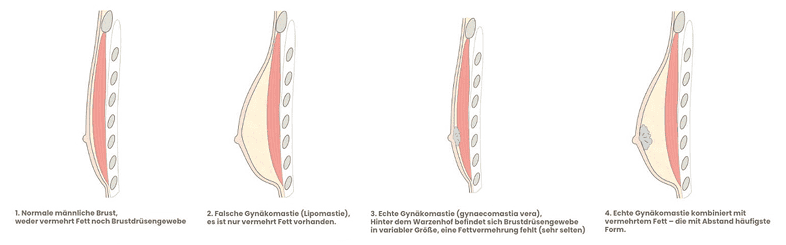
True gynecomastia (gynecomastia vera) is a benign growth of breast glandular tissue in men. It sometimes occurs on only one side. However, both sides are usually affected, although the degree of growth can vary. Gynecomastia is not a disease, but a natural remnant of puberty in young men.
False gynecomastia is also called pseudogynecomastia, but the correct term is lipomastia. In this case, the enlarged breast is caused solely by an increased accumulation of fat behind the areola, which is never pathological. Both pure gynecomastia and isolated lipomastia are relatively rare. In approximately 95% of all cases of enlarged male breasts, mixed forms are found, meaning breast glandular tissue behind the areola together with increased fat.
Gynecomastia – Facts and Information
Below are important details about the causes and manifestations of gynecomastia.
What does gynecomastia look like?
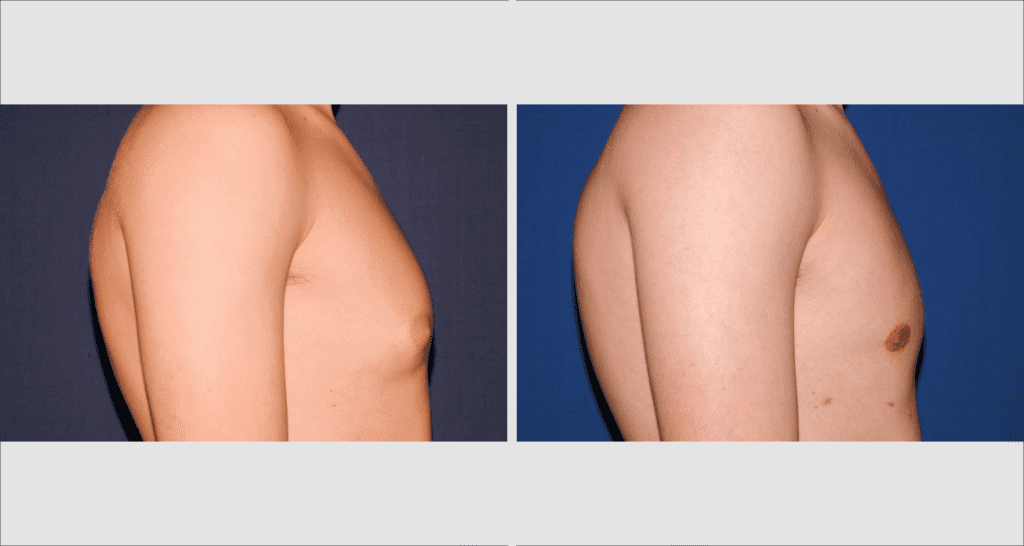
Gynecomastia is more or less clearly visible on the bare torso, depending on its severity. If it is only mild, it is more noticeable in a side view or in a semi-profile, i.e., with the torso turned at a 45° angle. In this view, the protruding nipple stands out, while the torso forms the body’s silhouette. If it is more pronounced, the protrusion is also visible under close-fitting clothing (T-shirt), and in extreme cases (B/C cup size in men!), it can hardly be concealed. As already mentioned, gynecomastia is almost always not a disease; however, in rare cases, it can be the result of a pathological hormonal imbalance.
Since men with breast tissue can develop breast cancer, in Austria, the costs for the removal of breast tissue in cases of true gynecomastia are covered by social insurance; thus, the presence of breast tissue in men is recognized as a medical condition, even if the cause is not pathological.
Non-pathological gynecomastia
One in two men has breast tissue behind the areola. If these cells have a positive hormone receptor for estrogen (one of the female sex hormones, which is also produced in the adrenal glands of men), these cells would grow and enlarge when estrogen levels in the blood rise. This is precisely what happens during puberty: in young men, testosterone levels rise. The body perceives this as a hormonal imbalance, so the adrenal glands produce more estrogen to compensate; therefore, the breast tissue grows significantly during puberty, provided, of course, that the hormone receptor is positive. After puberty, testosterone levels drop again, and with them, estrogen levels. The breast tissue regresses—but not always: in about one in every 100 men, this regression does not occur, and a ‘true’ gynecomastia remains. This is generally neither dangerous nor pathological.
Neonatal gynecomastia
A similar process occurs in newborns (effect of placental hormones on the breast) – after a few weeks it recedes.
Age-related gynecomastia
Due to the natural decline in testosterone levels with age, the level of LH (luteinizing hormone) rises as a compensatory mechanism. This leads to increased estrogen production in the adrenal glands.
Frequency of gynecomastia
Up to 1% of adult men are affected (i.e., one in every hundred), with approximately 95% of cases presenting as mixed forms (breast glandular tissue and increased fat), as previously mentioned. Around 60% of adolescents during puberty, particularly around the age of 14, experience temporarily enlarged breasts.
Pathological gynecomastia
The causes can be varied, but are fundamentally similar: any pathological changes in the male hormonal balance can lead to true gynecomastia if they are associated with reduced testosterone production or an excess of the female hormone estrogen.
Since breast tissue is very sensitive to fluctuations in the male hormonal balance, disturbances in this balance can promote the growth of the male breast. Therefore, all factors that can interfere with the hormonal balance are risk factors for true gynecomastia.
… This hormonal imbalance can have various underlying causes:
● Pituitary tumors
● Adrenal tumors
● Lack of testosterone effect despite normal hormone production (androgen resistance)
● Klinefelter syndrome (congenital absence or malformation of the testes, 47-XXY)
Since the liver breaks down hormones such as estrogen, a chronic liver disease like cirrhosis can lead to an excess of female hormones.
Chronic kidney dysfunction, such as renal insufficiency, can also affect the hormonal balance by altering the kidney’s filtering function.
The loss of one or both testicles can also lead to true gynecomastia, as the estrogen-to-testosterone ratio can change to such an extent that breast tissue proliferates.
Since the loss of one or both testicles, true gynecomastia can occur because the estrogen-to-testosterone ratio can change so drastically that breast tissue develops. Similarly, an overactive thyroid (hyperthyroidism) can lead to an altered hormonal balance that promotes gynecomastia.
Obesity and poor diet
Enlarged male breasts often occur in cases of obesity. The likely cause here is increased fat storage, which stores estrogen. Increased fat means increased estrogen, so obesity can also induce breast growth. In this case, of course, increased fat is also a contributing factor.
Anorexia nervosa can also lead to the development of gynecomastia due to the drop in testosterone levels.
Personal care products, medication, or drugs
Another cause of gynecomastia can be medications, drugs, and personal care products. Antidepressants, antibiotics, and heart medications can also affect hormone metabolism. Furthermore, long-term use of heroin, marijuana, and alcohol can be a possible cause of hormonal changes leading to true gynecomastia. A common cause of drug-induced gynecomastia is the use of anabolic steroids, which is unfortunately often the case among bodybuilders.
There are hair and skin care products that contain small amounts of synthetic female hormones. These can be absorbed into the bloodstream through the scalp and skin. Chemical substances in tea tree and lavender oil (which are not 100% natural) are also suspected of acting like estrogens. All of these can also lead to true gynecomastia.
Hormonal changes
In young adult men, the normal estrogen level is approximately 20 to 40 picograms per milliliter of blood, while the normal testosterone level is approximately 6 nanograms per milliliter of blood.
The testosterone/estrogen ratio is therefore approximately 200 to 300. If pseudogynecomastia develops due to age-related obesity, the fat tends to accumulate in the male breast. However, lipomas can also be the cause of the condition.
Diagnosis of gynecomastia
If a man experiences breast growth or feels a lump behind the areola, he should consult a doctor. The most important diagnostic steps include:
● Mammography
● Breast ultrasound
● Hormone levels
If the hormone levels are abnormal, the cause must be investigated and, of course, treated before any surgery.
To help the doctor distinguish between pseudogynecomastia and true gynecomastia, it is helpful to palpate the breasts. This allows for a quick differentiation between glandular tissue and fat. The diagnosis can also be reliably confirmed with ultrasound and mammography (X-ray). Hormone levels are measured to rule out any underlying medical condition.
If the male breasts have been present since birth or the doctor cannot determine a cause, a chromosome analysis can help rule out a genetic disorder. Often, such an examination is only performed for cost reasons if there are further indications of a genetic condition.
Stages of gynecomastia
If the diameter of the areola in a man exceeds 3 cm, gynecomastia is often present.
Breast growth can be classified into the five Tanner stages based on the size and shape of the nipple:
● B1: The mammary gland is palpable.
● B2: The mammary glands protrude and the areola is enlarged.
● B3: The mammary gland is larger than the areola.
● B4: The areola is raised and the mammary gland appears solid.
● B5: At this stage, the male breast corresponds to the mature female breast.
Correction options for the male breast
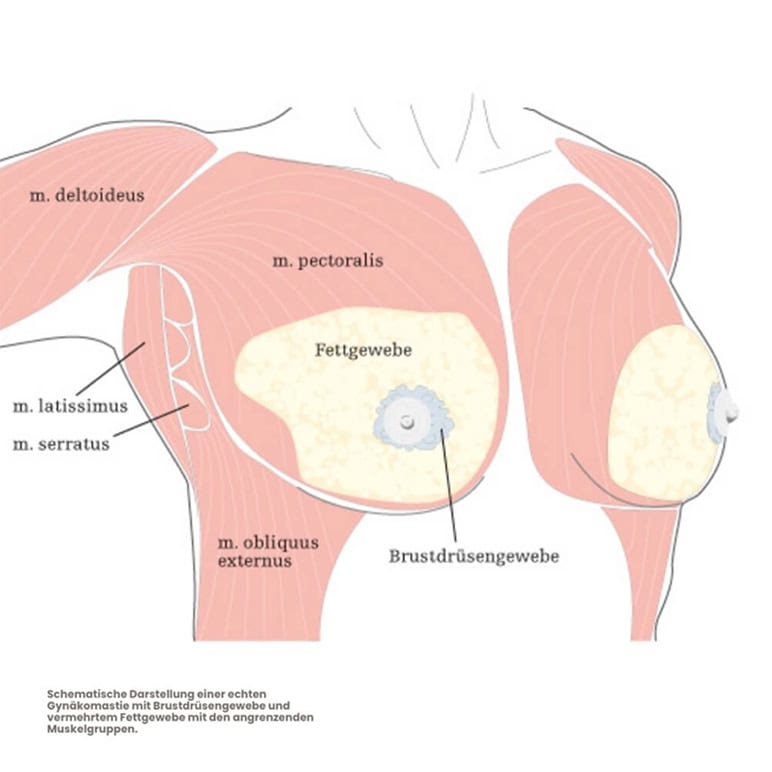
Surgical correction of glandular tissue (gynecomastia)
If breast glandular tissue is detected, surgical removal can be covered by social insurance. If only excess fat is found, then the correction is purely cosmetic and must be paid for privately.
For mixed cases (95%): The removal of breast glandular tissue is covered by health insurance, but the removal of fat, or any necessary breast lift, is generally not.
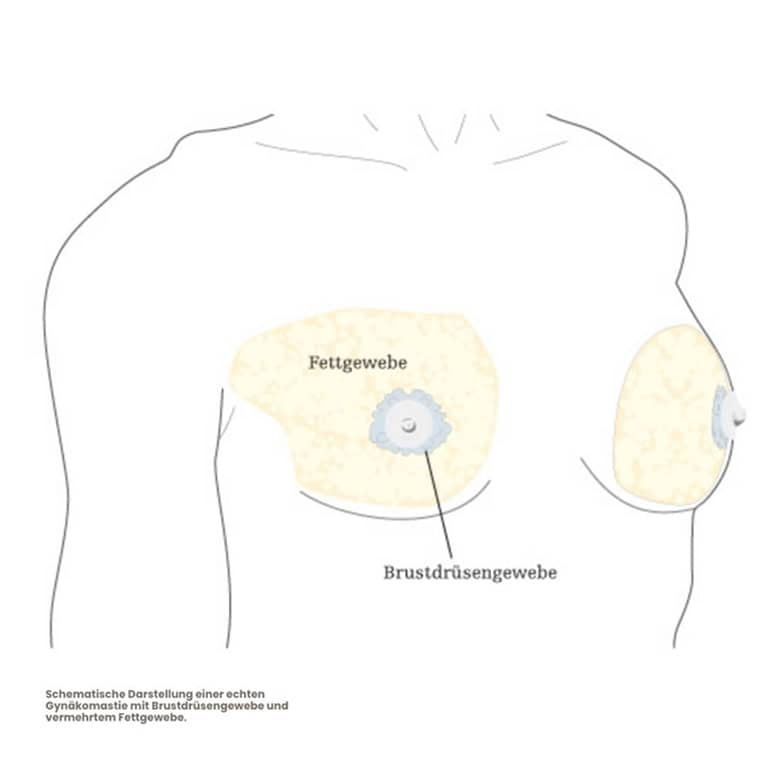
Treatment of lipomastia (fat-related breast enlargement)
If the enlarged breasts consist solely of excess fat (i.e., if lipomastia is present), being overweight is almost always a contributing factor. In such cases, weight loss and targeted exercise can often improve the appearance. However, sometimes weight loss and exercise are insufficient, and the lipomastia persists even after reaching a normal weight.
Those affected often become unhappy, feel ashamed, and withdraw from social life because they don’t feel masculine enough. In this case, the proven method of liposuction can bring about a lasting improvement in body image and self-esteem, so that the removal of the stigma boosts self-confidence. If necessary, or if a significant amount of fat had to be removed, a breast lift may also be required.
If pathological causes for gynecomastia can be ruled out, there is essentially nothing preventing surgical correction.
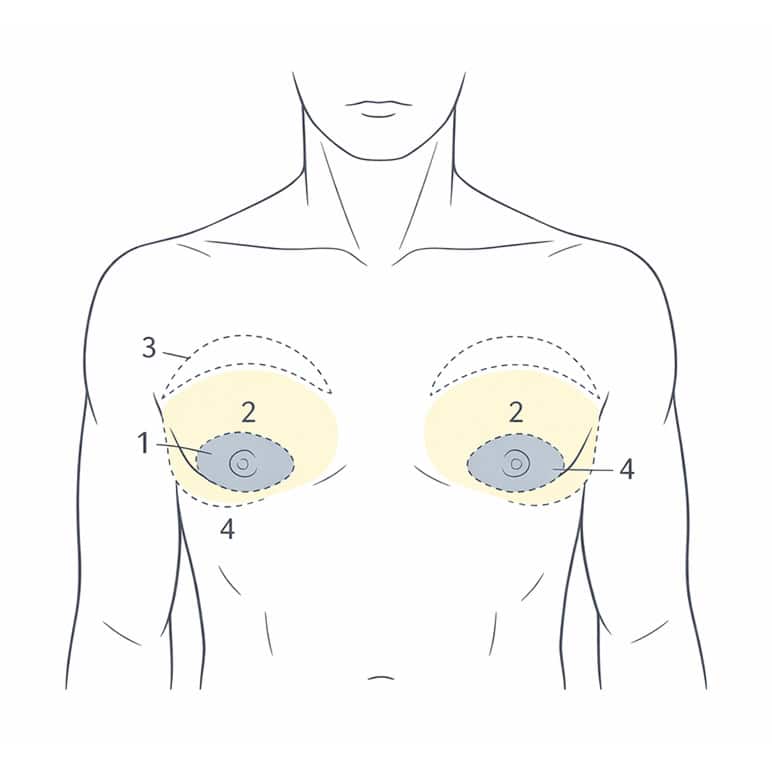
Individual steps in the surgical correction of true gynecomastia
- Removal of breast glandular tissue
- Removal of any excess fat
- Removal of any excess skin
When correcting gynecomastia with significant excess fat and skin, the procedure could be combined with a breast lift. However, experience has shown that any necessary lift is best performed in a second operation. This is because it affects skin circulation, which is considerably more at risk in single-stage procedures.
Regardless, liposuction is almost always necessary for aesthetic reasons in the correction of true gynecomastia (95%). This is the only way to achieve a harmonious transition with the surrounding area without any step-like appearance.
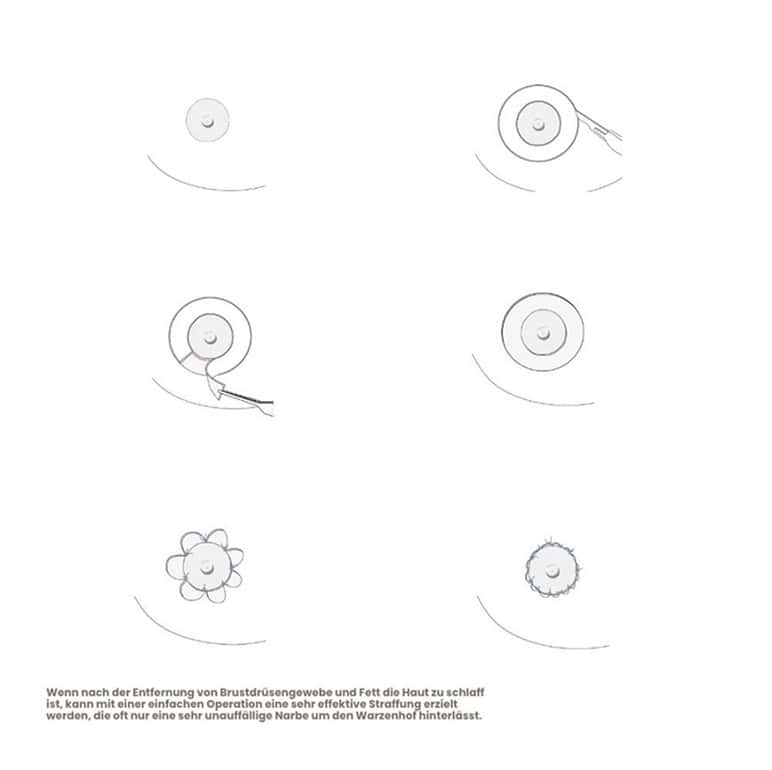
Areola
There are also cases of true gynecomastia and lipomastia where the diameter of the areola should/can be reduced if it is perceived as too large. For men, a diameter of 22-24 mm is considered ideal. However, this is not a general recommendation; each man should decide for himself whether the diameter of his areola is important to him and whether he wishes to reduce it.
The severity of gynecomastia varies considerably from person to person, and so sometimes simple liposuction combined with a breast lift can be a sensible option, especially if the male breast enlargement is only present on one side.
Ultimately, each individual decides for himself how much the appearance bothers him and whether and to what extent he desires breast correction.
Gynecomastia – Organizational Overview
-
01
First Ordination
Have you already purchased the book "Gynecomastia" (€40)? Then the initial consultation for your surgery is included. A standard initial consultation lasts approximately 30 minutes. Without book purchase: €250. Detailed consultation or second opinion: €300. If you opt for surgery, the cost of a second opinion will be credited towards the cost. My personal tip: Always get a second opinion before undergoing any procedure.
-
02
Hospital stay
The procedure is usually performed on an outpatient or day-clinic basis at my surgical center. An overnight stay in the hospital is only necessary in cases of extensive findings or combined procedures. Costs vary depending on the duration of the procedure, room category, and hospital.
-
03
Before the procedure
All information regarding pre-operative examinations, as well as a checklist for planning your appointment, stay, and follow-up appointments, can be found here:
-
04
Anesthesia and procedure
The procedure is usually performed under sedation (sedoanalgesia). In cases of extensive findings or combined procedures, general anesthesia may be advisable. Anesthesia costs vary depending on the duration of the operation.
-
05
Visits & Inspections
Follow-up checks are included in the fee.
Cost
How much does the procedure cost?
Depending on the severity and extent of the surgery, the procedure costs between €2,500 and €8,000. On average, you can expect to pay around €5,500.
In Austria, if breast glandular tissue (genital gynecomastia) is confirmed, the removal of the glandular tissue is covered by social insurance. The removal of fatty tissue or a necessary breast lift is generally a private expense.
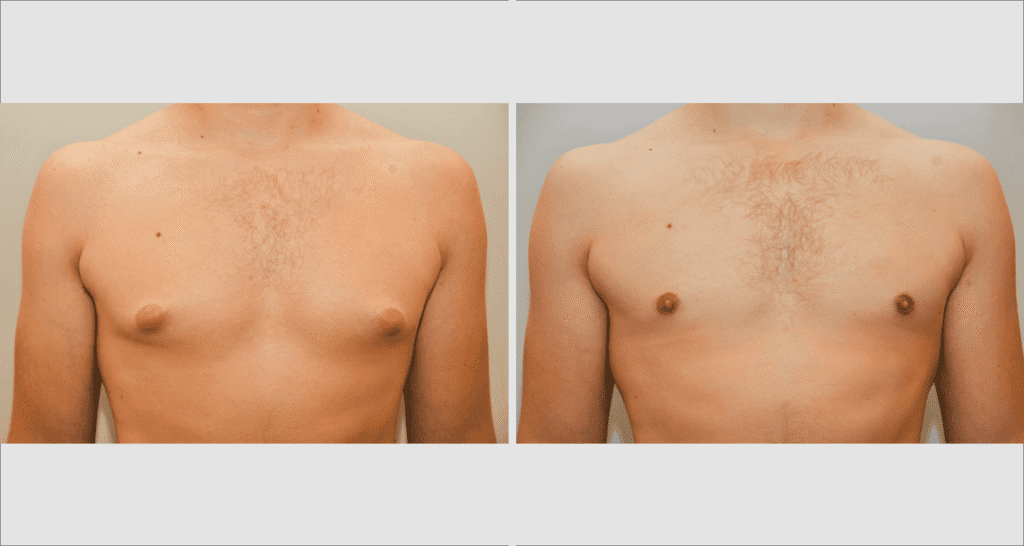
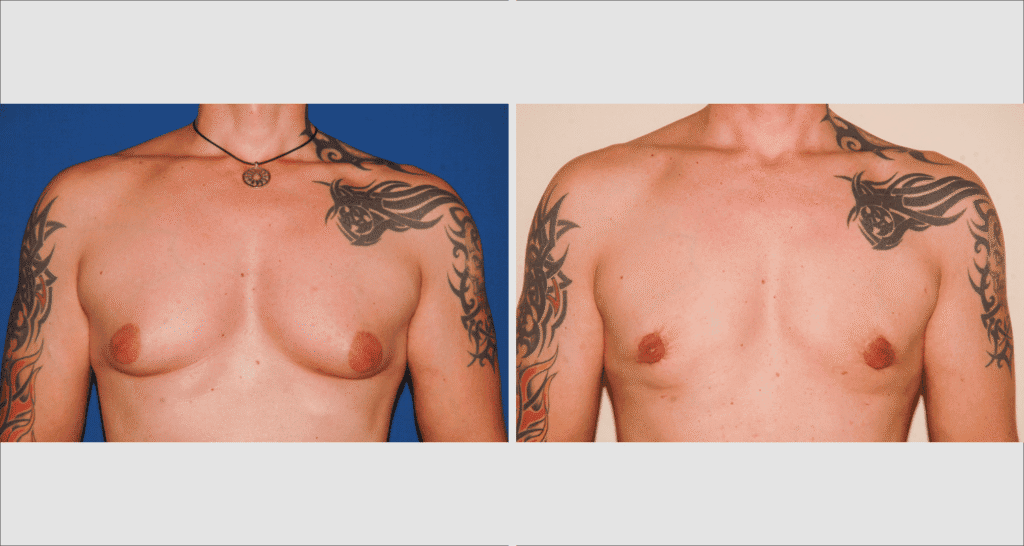
Before/After comparison
Reviews
This is what our patients say

Dr. Turkof made my lips more beautiful and symmetrical.
He looked from every angle and only injected the filler where I really needed it. I look natural — if it were possible, I would get more injected.
I know Dr. Turkof through a friend who came all the way from Germany specifically for him. She was very happy with him and recommended him to me, as I was really struggling with dark under-eye circles. My surgery was 3 months ago and I am very pleased with the natural result.
I had two operations with autologous fat transfer to the breast and ribs with Prof. Turkof.
The result is fantastic and I am very satisfied. The quality of Prof. Turkof as a plastic surgeon is, from my perspective, undisputed.
Frequently asked questions
What is the difference between gynecomastia and lipomastia?
Gynecomastia means the growth of breast glandular tissue.
Lipomastia describes a pure accumulation of fat without glandular tissue.
In 95% of cases, a mixed form is present.
Does the glandular tissue grow back after the operation?
No. Removed breast tissue does not usually grow back.
However, significant weight gain or hormonal changes can affect its appearance.
Will visible scars remain?
The incision is usually made at the edge of the areola.
The resulting scars are generally very inconspicuous.
Will the health insurance cover the costs?
In Austria, if glandular tissue is confirmed, social insurance covers its removal.
Liposuction or skin tightening procedures are usually privately funded.
When will I be able to participate in society again?
Light social activities are usually possible after 10–14 days.
Sports should be avoided for several weeks.
Do you have any questions?
Personal consultation
Do you have any further questions or would you like some general information? We offer personalized, comprehensive advice, drawing on our experience since 1997.
You can schedule your appointment online at any time.
Our most popular treatments
Breast augmentation using the patient’s own fat
Gentle breast augmentation using the body's own fat – for a natural shape and harmonious proportions.
Learn moreEyelid Lift in Vienna | Youthful Eyes
A fresher, more alert appearance achieved by removing excess skin from the upper and lower eyelids.
Learn moreFacelift
Facial and neck tightening for a visibly younger, naturally fresh appearance.
Learn moreGynecomastia
Treatment for male breast enlargement to achieve a masculine, flat chest contour and boost self-confidence.
Learn moreRhinoplasty
Aesthetic and functional rhinoplasty for a harmonious facial profile.
Learn more